
Advisor Starting Point
Masai Mara
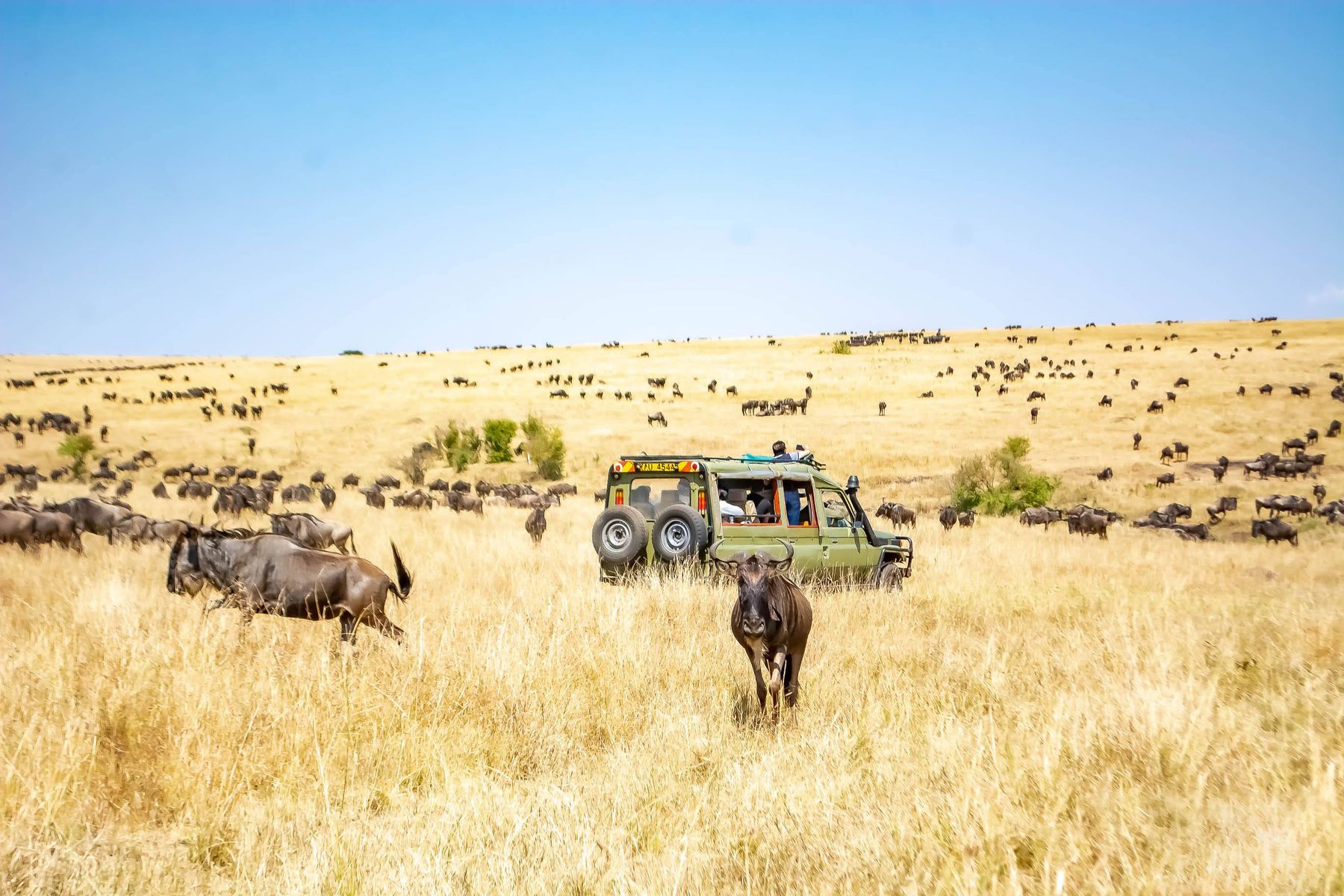
Big cats, seasonal migration movement, open plains, balloon flights, tented camps, and neighboring conservancies create Kenya's most famous safari chapter.

Destination Guide
Elephants beneath Kilimanjaro, the Mara's open plains, private conservancies, Samburu's dry north, Nairobi energy, and an Indian Ocean finish.
Kenya rewards travelers who choose regions by season and safari style rather than animal checklists. The Masai Mara, Amboseli, Samburu, Laikipia, Nairobi, and Diani each serve a different purpose. Strong planning protects game-drive time, limits camp changes, selects guides and reserve access carefully, and treats culture as relationship rather than performance.
Travel styles
Experience Explorer
Choose the plains, mountain-view ecosystem, northern wildlife, capital gateway, coast, or cultural connection that should lead.
Big cats, seasonal migration movement, open plains, balloon flights, tented camps, and neighboring conservancies create Kenya's most famous safari chapter.
Advisor insight
A first safari usually needs two complementary wildlife regions, not four rushed camps. Add Diani only when three or more restorative beach nights fit cleanly after safari.
Traveler fit
Advisor guidance
Migration crossings are never guaranteed. Camp location, rainfall, herd movement, patience, and guide quality matter more than a date printed in a brochure.
Every camp move costs prime wildlife time. Small-aircraft luggage limits, dusty roads, early departures, and uneven terrain are part of the experience.
Common planning mistakes
Norma, Dock 10 Travel
Honest tradeoffs
Best Ways to Experience Kenya
Fly-in routing protects time on longer journeys; private vehicles and conservancies add flexibility when photography, family pace, or solitude matters.
Best forFirst-time safari travelers wanting big cats, elephants, iconic landscapes, and two distinct ecosystems.
Advisor noteUse at least three nights in each and fly when road time would dominate.
Best forWildlife-focused travelers who value seasonal camp placement, fewer vehicles, night drives, and walking options.
Advisor noteBuild a strong safari that succeeds even without a river crossing.
Best forRepeat safari travelers and photographers wanting Samburu, Laikipia, conservation, distinctive species, and drier landscapes.
Advisor noteChoose camps for access, guiding, community partnerships, and heat-season comfort.
Best forHoneymooners, families, and celebration travelers who want a restorative Indian Ocean finish.
Advisor noteProtect at least three beach nights after the final bush flight.
Advisor-built trip ideas
Four distinct routes using advisor-quality planning ranges, not guaranteed prices.

8–10 days
Nairobi, Amboseli, and the Masai Mara with three-night safari stays and minimal wasted transit.
Best for
First-time safari travelers wanting Kenya's iconic contrasts.
Typical investment
$8,500–$15,000 per person
Route
Nairobi → Amboseli → Masai Mara
What makes it special
Kilimanjaro-backed elephants lead into predator-rich plains and classic tented-camp evenings.
Reality check
Road transfers can consume wildlife time; fly between distant ecosystems when the budget supports it.
Advisor takeaway
Choose camp location and guiding before decorative luxury.
Investment context
Planning range per person, based on two travelers sharing accommodations. International airfare is excluded. Final pricing varies by season, camp category, internal flights, reserve fees, and private-guiding choices. Driven by Mara and Amboseli camp level, private vehicle choices, internal flights, park fees, and season.
10–12 days
A seasonally placed Mara camp paired with a private conservancy and optional Laikipia or Samburu contrast.
Best for
Wildlife enthusiasts, photographers, and travelers valuing lower vehicle density.
Typical investment
$12,000–$22,000 per person
Route
Nairobi → Mara ecosystem → private conservancy → optional northern Kenya
What makes it special
Seasonal wildlife movement combines with flexible activities and a more private bush rhythm.
Reality check
No itinerary can guarantee a river crossing, and peak season brings price and vehicle pressure.
Advisor takeaway
Use a private vehicle for serious photography and choose a camp that succeeds without a crossing spectacle.
Investment context
Planning range per person, based on two travelers sharing accommodations. International airfare is excluded. Final pricing varies by season, camp category, internal flights, reserve fees, and private-guiding choices. Driven by migration-season demand, conservancy exclusivity, private vehicles, premium camps, internal flights, and reserve fees.

11–14 days
Two focused wildlife regions followed by a four-night Indian Ocean stay at Diani Beach.
Best for
Honeymooners and travelers wanting adventure followed by rest.
Typical investment
$10,500–$19,000 per person
Route
Nairobi → two safari ecosystems → Diani Beach
What makes it special
Early game drives and open savannah give way to palms, warm water, and unstructured coastal days.
Reality check
A short beach add-on can become another transfer day rather than recovery.
Advisor takeaway
Protect four beach nights and select the coast property for atmosphere, not just room photos.
Investment context
Planning range per person, based on two travelers sharing accommodations. International airfare is excluded. Final pricing varies by season, camp category, internal flights, reserve fees, and private-guiding choices. Driven by safari camp and beach resort category, internal flights, park fees, room type, water activities, and season.

9–12 days
Nairobi and two family-appropriate safari regions with a private vehicle, flexible pacing, and age-matched conservation experiences.
Best for
Families and multi-generational travelers ready for wildlife-focused days.
Typical investment
$9,500–$18,000 per person
Route
Nairobi → family-fit conservancy or Amboseli → Masai Mara
What makes it special
Shared wildlife discovery, excellent guides, and flexible private touring can create a defining family journey.
Reality check
Camp age rules, room layouts, long drives, pools, meals, and medical access vary widely.
Advisor takeaway
Private vehicles are often worth the investment for schedule control and intergenerational comfort.
Investment context
Planning range per person, based on two travelers sharing accommodations. International airfare is excluded. Final pricing varies by season, camp category, internal flights, reserve fees, and private-guiding choices. Driven by family room configuration, private vehicle use, child policies, internal flights, park fees, and school-holiday demand.
Travel Planning Center
Twenty practical decisions covering seasons, wildlife regions, camps, flights, culture, health, and access.
Related Destinations

The Serengeti's endless plains, Ngorongoro's natural amphitheater, Tarangire elephants, remote southern wilderness, and Zanzibar's Indian Ocean rhythm.
Serengeti, Ngorongoro, Tarangire, Zanzibar, and longer northern circuits.
Choose Tanzania for a broader circuit; Kenya for compact high-impact safari and conservancy variety.
%2C%20Table%20Mountain%2C%20Blick%20auf%20City%20Bowl%20--%202024%20--%202826.jpg?width=1800)
Cape Town beneath Table Mountain, the Winelands' estates, private-reserve wildlife, the Garden Route, and a country whose food, culture, and landscapes reward real time.
Cape Town, Winelands, private reserves, and approachable safari logistics.
South Africa adds city and wine depth; Kenya centers East African landscapes and wildlife.

Mokoro channels in the Okavango Delta, elephant-rich Chobe, Moremi's mosaic, salt-pan horizons, and an intentionally low-density safari rhythm.
Okavango waterways, low-density camps, wilderness, and premium fly-in safari.
Botswana emphasizes exclusivity and water; Kenya offers broader style and coast combinations.

Jemaa el-Fnaa at sunset, Fez's living medina, High Atlas villages, Sahara horizons, garden riads, blue Chefchaouen, and a cuisine built for long tables.
Medinas, riads, Atlas landscapes, Sahara, food, and private cultural touring.
Choose Morocco for cultural immersion rather than wildlife-led travel.
Advisor note: Tanzania is the most natural safari comparison, but adding a border only works when each country's ecosystems receive enough nights.
Kenya FAQ
Plan at least six to eight safari nights across two regions. Eight to ten total days suits a focused first trip, while eleven to fourteen days supports a deliberate Diani Beach finish.
Choose the Mara for predators, open plains, conservancies, and migration movement. Choose Amboseli for elephant behavior, wetlands, and Mount Kilimanjaro landscapes. Many first trips combine them.
Often yes for travelers valuing fewer vehicles, flexible activities, walking, night drives, community models, or private guiding. Exact benefits depend on the conservancy and camp.
Add Diani when three to five nights create genuine rest after safari. A two-night add-on can be consumed by flights and transfers.
It can be with exact planning. Camp age policies, family rooms, private vehicles, small-aircraft steps, rough roads, room paths, and medical access must be reviewed before booking.